


How to Choose a Diode Laser Hair Removal Machine
Mar 21, 2026
Leave a message
Diode laser hair removal machine has become one of the most important devices in modern aesthetic clinics and beauty salons. With the rapid growth of the hair removal market, more and more clinics are investing in professional diode laser systems. However, not all diode laser machines are the same. Choosing the right machine directly affects treatment results, customer satisfaction, and return on investment. For clinics and distributors looking for reliable equipment, choosing a professional manufacturer such as NewAngie can help ensure machine quality, stable performance, and long-term service support.
1. Understand the Basic Technology of Diode Laser
Before choosing a machine, the first step is to understand how diode laser hair removal works. Diode lasers use specific wavelengths of near-infrared light to target melanin in the hair follicle and destroy the follicle through heat, a principle known as selective photothermolysis. Compared with IPL, diode lasers use a single wavelength, which allows more precise targeting of melanin and deeper penetration into the dermis, improving hair removal efficiency while reducing damage to surrounding tissue.
Professional manufacturers like NewAngie focus on stable energy output and precise wavelength technology to ensure that every pulse delivers consistent energy, which is very important for treatment results and safety.
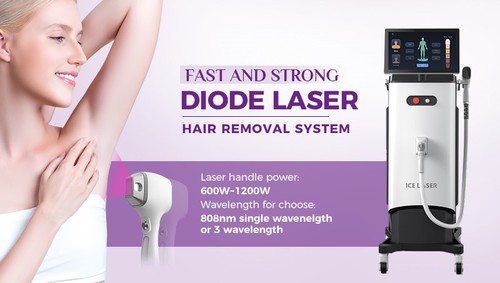
2. Choose the Right Wavelength
Wavelength is one of the most important factors when choosing a diode laser machine.
Common wavelengths include:
| Wavelength | Suitable For |
|---|---|
| 755nm | Fine hair, light skin |
| 808nm | Most skin and hair types |
| 1064nm | Dark skin, deep hair follicles |
Modern machines often use triple wavelength (755nm + 808nm + 1064nm) technology, which allows treatment of all skin types (Fitzpatrick I–VI) and different hair thicknesses.
Many clinics now prefer NewAngie triple wavelength diode laser machines because they can treat a wider range of clients, from fine facial hair to thick body hair, and from light skin to dark skin safely.

3. Check Machine Power (Very Important)
Power determines treatment speed and effectiveness. Higher power machines can deliver energy faster and destroy hair follicles more effectively.
General power levels:
| Power | Machine Level |
|---|---|
| 400–600W | Entry level |
| 800–1200W | Commercial use |
| 1500–2000W+ | Professional clinic |
| 2400W+ | High-end clinic |
Professional diode laser machines from NewAngie are typically designed with high power output and stable energy delivery systems, which allow clinics to perform fast treatments and improve daily customer capacity.
4. Evaluate Fluence (Energy Density)
Fluence is the energy delivered to the skin, usually measured in J/cm². Clinical diode laser machines typically provide 5–100 J/cm², and higher fluence generally leads to better hair removal results when used correctly with proper cooling.
Stable fluence output is very important. Machines from experienced manufacturers like NewAngie usually have more stable energy calibration systems, which ensures consistent treatment results across different sessions.
5. Cooling System (Determines Comfort and Safety)
The cooling system is one of the most important parts of a diode laser machine. A good cooling system protects the skin and makes the treatment comfortable.
Common cooling methods include:
Air cooling
Water cooling
TEC semiconductor cooling
Sapphire contact cooling (best)
Professional diode laser machines from NewAngie usually combine water + air + TEC + sapphire contact cooling, and the sapphire tip temperature can reach 0–5°C, which greatly improves safety and comfort. This is especially important for sensitive areas such as the face and bikini line.
6. Spot Size and Treatment Speed
Spot size determines how fast the treatment can be performed. Larger spot sizes cover more skin area per pulse and reduce treatment time.
Common spot sizes include:
12×12mm
12×20mm
15×25mm
15×30mm
20×40mm
Large spot sizes are especially important for treating large areas like legs, back, and chest. Larger spot sizes significantly improve clinic efficiency and profitability. Many NewAngie diode laser machines offer multiple spot size options, allowing clinics to switch between small and large treatment areas easily.
7. Pulse Width and Repetition Rate
A professional diode laser machine should have adjustable pulse width and repetition rate.
Pulse width: 5ms–400ms
Frequency: 1–10Hz or higher
Adjustable pulse duration allows the operator to treat different hair thickness and skin types safely and effectively. High repetition rate allows in-motion (sliding) treatment, which is faster and more comfortable for clients. Professional systems such as those provided by NewAngie support both stamping mode and sliding mode treatment.
8. Handle Lifespan and Laser Bar Quality
The handle (handpiece) is the most expensive part of the diode laser machine. Its lifespan determines maintenance cost and long-term profitability.
Typical handle lifespan:
20 million shots
30 million shots
50 million shots
100 million shots
High-quality laser bars provide more stable energy output and longer lifespan. NewAngie diode laser machines use high-quality laser bars and support replaceable handles, which helps clinics reduce maintenance costs and extend machine service life.

9. Certifications and Safety Standards
When purchasing a diode laser machine, safety certification is very important. Clinics should choose machines with medical certifications such as:
CE
FDA
ISO 13485
IEC 60601
Manufacturers like NewAngie provide certified machines that meet international medical device standards, which is very important for distributors and clinics operating in regulated markets.
10. After-Sales Service and Training
Many buyers ignore after-sales service, but this is very important for long-term operation.
You should check:
Warranty (at least 1–2 years)
Technical support
Training support
Spare parts availability
Remote diagnosis service
Software upgrade support
One of the key advantages of working with NewAngie is that the company provides training, marketing materials, and technical support for distributors and clinics, helping customers start their hair removal business more easily.
11. Calculate Return on Investment (ROI)
Before buying a machine, clinics should calculate ROI.
Example:
Machine price: $5,000
Treatment price per session: $50
Clients per day: 8
Monthly working days: 25
Monthly revenue = 50 × 8 × 25 = $10,000
This means the machine cost can be recovered in a few months, and the rest becomes profit. Because hair removal requires multiple sessions, diode laser machines create long-term recurring revenue for clinics. Many clinics choose NewAngie diode laser machines because of their stable performance and long lifespan, which improves ROI over time.
12. Single Wavelength vs Triple Wavelength Machine
| Type | Advantage | Disadvantage |
|---|---|---|
| Single 808nm | Lower cost | Limited skin types |
| Triple wavelength | All skin types | Higher cost |
| 4 wavelength | Advanced | Expensive |
Triple wavelength machines provide more flexibility and better treatment coverage, making them more suitable for commercial use. NewAngie offers both single wavelength and triple wavelength diode laser machines to meet different market needs and budget levels.
13. Key Checklist Before Buying
Here is a simple checklist for buyers:
Wavelength: 755 + 808 + 1064nm
Power: 1200W+
Fluence: 5–100 J/cm²
Spot size: Large spot size available
Cooling: Sapphire + TEC + Water + Air
Pulse width: Adjustable
Frequency: 1–10Hz
Lifespan: 20–50 million shots
Certification: CE/FDA/ISO
Warranty: 1–2 years
Training: Provided
After-sales service: Available
Choosing a reliable manufacturer such as NewAngie can help ensure that all these requirements are met.