


1927nm Thulium Laser Vs. CO2 Laser: Which Is The Better Choice For Your Clinic?
May 15, 2026
Leave a message
Understanding the Wavelength Gap
Choosing between a 1927nm Thulium laser and a CO2 laser is one of the most common dilemmas for clinic owners today. At Newangie, we believe the 'better' laser isn't about which machine is more powerful, but which one fits your patient profile. While the CO2 laser (10600nm) has long been the 'Gold Standard' for deep resurfacing, the Thulium laser (1927nm) has carved out a massive market share as a 'Sub-ablative' powerhouse. Let's break down the real-world differences based on our BMFR series designs.
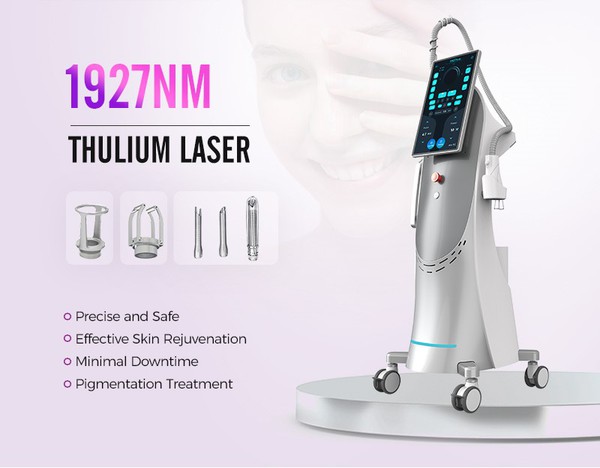
2. The 1927nm Thulium Advantage (BMFR25): The "Skin Smoother"
The Newangie BMFR25 operates at 1927nm, a wavelength that has a high absorption rate for water but is specifically designed to target the junction between the epidermis and dermis. Unlike traditional lasers that vaporize the surface, the Thulium laser is sub-ablative. This means it creates micro-channels while leaving the stratum corneum largely intact.
Key highlights of the BMFR25 include:
• Fast Treatment Times: Thanks to its high-power 30W source and large 50mm working head, a full-face session takes just 6 to 8 minutes.
• Versatility in Application: It excels at treating epidermal pigmentation, enlarged pores, and fine wrinkles. It's often referred to as the 'Baby Face' laser because of the radiant, smooth glow it leaves behind.
• Minimal Downtime: Because it doesn't fully 'strip' the skin, patients experience much faster healing compared to CO2 treatments.
3. The Fractional CO2 Powerhouse (BMFR28): The "Deep Reconstructor"
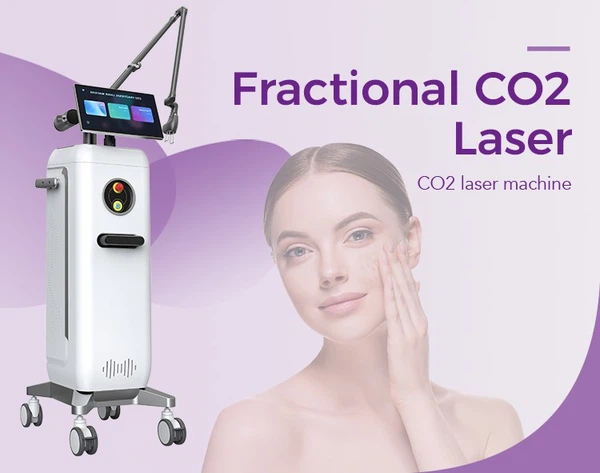
On the other hand, Newangie's BMFR28 utilizes a 70W USA Coherent RF Laser tube. This is a heavy-duty tool meant for deep tissue remodeling. CO2 lasers work by vaporizing columns of skin tissue (ablation), which triggers a massive wound-healing response.
Where the BMFR28 shines:
• Serious Structural Repair: It is the go-to for deep acne scars, surgical scars, and severe photo-aging. If a patient has deep-set wrinkles or significant texture issues, CO2 remains the most effective option.
• Multi-functional Capabilities: Our BMFR28 isn't just for skin. It includes specialized heads for vaginal tightening and precision skin cutting (mole and wart removal), making it a multi-purpose surgical and aesthetic platform.
• Precision Control: With 8 unique scanning shapes and adjustable dwell times, doctors can customize exactly how much heat is delivered to the tissue.
4. Comparative Breakdown: Which fits your business?
|
Feature |
BMFR25 (Thulium 1927nm) |
BMFR28 (CO2 10600nm) |
|
Primary Goal |
Brightening, Pores, Fine Lines |
Deep Scars, Resurfacing, Surgical |
|
Skin Interaction |
Sub-ablative (Gentle) |
Ablative (Aggressive) |
|
Healing Time |
1–3 days (Socially acceptable) |
7–14 days (Significant peeling) |
|
Pain Level |
Low (Often no numbing needed) |
Moderate (Requires numbing) |
|
ROI Strategy |
High volume, "Lunch-time" facial |
High ticket, specialized procedure |

5. Why Choose Newangie Systems?
Whether you choose the BMFR25 or the BMFR28, Newangie builds these machines with the practitioner in mind. Our BMFR25 features customizable software and intuitive displays that allow for quick parameter adjustments. Our BMFR28 uses a premium 7-joint imported laser arm, ensuring that the 70W of power is delivered with zero loss and maximum stability during long procedures. Both systems are designed for durability, using air-cooling and RF tubes to ensure a long lifespan compared to cheaper glass-tube alternatives.
In short: if your clinic focuses on younger patients looking for 'glass skin' and pigmentation removal with little downtime, the BMFR25 Thulium laser is your best investment. If your focus is on anti-aging, scar revision, and multi-functional surgical treatments, the BMFR28 CO2 laser is the essential workhorse. Many leading clinics today actually carry both to provide a full spectrum of skin care.