


5 Best Radio Frequency Treatments For Skin Tightening
Nov 19, 2026
Leave a message
Loose skin, reduced elasticity, and visible wrinkles are common concerns among clients visiting beauty salons and aesthetic clinics. While skincare products can support daily skin maintenance, professional radio frequency (RF) treatments offer another approach by delivering controlled energy into the skin and underlying tissue.
However, radio frequency is not a single treatment technology. Different RF systems use different electrode configurations, energy delivery methods, and applicator designs. Some are developed for non-invasive facial treatments, while others are designed for body applications or combine RF energy with microneedling.
For clinic owners and beauty professionals, understanding these differences is essential when choosing equipment and planning treatment services.
Here are five RF technologies worth considering for professional skin tightening applications.
1. Monopolar RF: For Full-Area Skin Tightening
Monopolar radio frequency is commonly associated with non-invasive skin tightening procedures. The system uses an active treatment electrode and a separate return electrode to complete the electrical circuit.
This configuration allows RF energy to pass through a relatively large treatment area. Depending on the equipment design, energy can be delivered to deeper tissue structures compared with some localized RF configurations.
Monopolar RF is often considered for clients concerned about facial laxity, especially around the cheeks, jawline, and neck. Certain systems are also designed for body treatments.
What makes it different?
The defining feature is the electrical pathway between the treatment electrode and the return electrode. Treatment temperature, energy settings, and cooling mechanisms all influence the procedure.
Typical treatment applications:
Facial skin laxity
Jawline and cheek areas
Neck skin tightening
Selected body areas
For clinics, monopolar RF may be worth considering when skin tightening is a major part of the treatment menu.
2. Bipolar RF: More Localized Energy Delivery
Bipolar RF uses two electrodes positioned within the same applicator. Energy travels between these electrodes rather than through a separate return electrode.
The distance between electrodes and the applicator design influence the distribution of RF energy. This makes bipolar RF a common configuration in facial beauty equipment.
Compared with larger monopolar treatment platforms, bipolar devices are frequently designed with smaller applicators for working on specific areas.
What makes it different?
Bipolar RF provides a relatively localized energy pathway. It is often incorporated into facial treatment devices that focus on skin appearance, fine lines, and firmness.
Typical treatment applications:
Cheeks and forehead
Fine lines
Facial skin maintenance
Small treatment areas
For salons introducing RF facial services, bipolar systems can be an option when the intended treatment areas are relatively small.
3. Multipolar RF: One Technology for Multiple Treatment Areas
Multipolar RF uses three or more electrodes arranged within a treatment head. The arrangement allows manufacturers to develop applicators with different electrode patterns and treatment characteristics.
Many multipolar RF machines are designed for both facial and body applications. Some combine RF with vacuum suction, massage rollers, or other technologies.
This combination is particularly relevant to salons that want to expand their service offerings without purchasing a separate machine for every treatment.
What makes it different?
Its multiple-electrode configuration provides flexibility in applicator design. The actual treatment performance depends on electrode placement, device output, treatment head size, and operating parameters.
Typical treatment applications:
Facial skin tightening
Abdomen and waist treatments
Thigh and arm treatments
Cellulite appearance improvement
When comparing multipolar machines, pay attention to the number and design of treatment heads rather than relying on the electrode count alone.
4. 448 kHz CET/RET RF: Combining Facial and Body Treatment Applications
Among professional RF technologies, 448 kHz CET/RET systems have developed a distinctive position in the aesthetic and body treatment equipment market.
CET stands for Capacitive Energy Transfer, while RET stands for Resistive Energy Transfer. Both use radiofrequency energy, but their electrode structures and coupling characteristics differ.
CET applicators generally use insulated or dielectric-coated electrodes, while RET applicators use conductive electrodes designed for resistive energy transfer. The choice of applicator affects the energy delivery characteristics and treatment approach.
Unlike equipment designed exclusively for facial treatments, many 448 kHz CET/RET platforms are developed for a wider range of professional applications.
Why do salons consider 448 kHz RF?
One important factor is treatment versatility. Depending on the machine configuration, practitioners can select different applicators for facial and body treatments.
Common options include:
Capacitive electrodes for facial and soft-tissue-focused applications
Resistive electrodes for different body treatment protocols
Roller applicators for movement-based massage treatments
Flat electrodes for more localized treatment areas
The technology is also associated with Tecar therapy, a field that uses radiofrequency energy in professional therapeutic and wellness settings. Aesthetic equipment manufacturers have adapted CET/RET configurations for beauty and body treatment applications.
Typical professional applications:
Facial treatment programs
Body massage and contouring services
Abdomen and thigh treatments
Cellulite appearance improvement
Professional wellness services
For salons looking to develop both facial and body treatment menus, a 448 kHz CET/RET machine with multiple applicators can provide additional service options.
NewAngie 448 kHz CET/RET RF Equipment
NewAngie develops professional beauty equipment for salons, aesthetic clinics, and international distributors.
Its 448 kHz CET/RET RF equipment is designed around facial and body treatment applications, with different electrode configurations to support varied operating techniques.
For distributors and private-label businesses, NewAngie also provides OEM and ODM services, including logo customization, product appearance design, and packaging solutions.
Rather than offering only a standard machine configuration, the customization process allows business customers to discuss product specifications and branding requirements according to their target market.
5. RF Microneedling: Combining Needling with Radiofrequency Energy
RF microneedling is different from conventional non-invasive RF treatments because it delivers radiofrequency energy through needles inserted into the skin.
The needles create controlled microchannels while RF energy is delivered at selected depths. Depending on the device and treatment protocol, this approach can be used to address skin texture concerns and signs of aging.
RF microneedling is frequently used in professional aesthetic clinics for clients concerned about acne scars, enlarged pores, wrinkles, and skin laxity.
What makes it different?
The combination of mechanical needle penetration and RF energy distinguishes this technology from external RF applicators.
Treatment depth, needle type, energy level, and operating technique must be selected according to the device instructions and individual assessment.
Typical treatment applications:
Acne scar appearance
Enlarged pores
Uneven skin texture
Fine lines and wrinkles
Selected skin tightening procedures
RF microneedling requires appropriate professional training, sterile treatment components, infection-control procedures, and suitable aftercare.
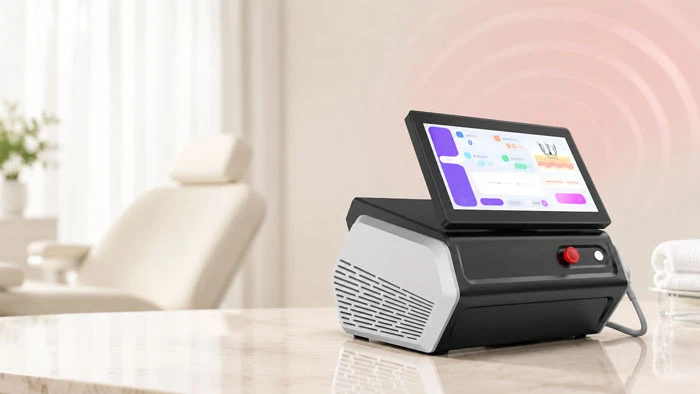
Comparison: Which RF Technology Should You Choose?
The best RF treatment depends on your clinic's service positioning, customer demand, and professional capabilities.
| RF Technology | Main Feature | Suitable Business Applications |
|---|---|---|
| Monopolar RF | Energy pathway through treatment and return electrodes | Skin tightening services |
| Bipolar RF | Energy delivered between two electrodes | Facial treatments |
| Multipolar RF | Multiple-electrode applicator design | Facial and body services |
| CET/RET 448 kHz | Capacitive and resistive energy transfer | Face, body, and massage-based programs |
| RF Microneedling | RF delivered through microneedles | Advanced aesthetic procedures |
5 Factors to Check Before Buying an RF Skin Tightening Machine
A machine's frequency or advertised power is not enough to determine whether it is suitable for your business. Equipment buyers should evaluate the complete system.
1. Treatment head configuration
Check whether the machine includes dedicated facial and body applicators. Electrode size, shape, material, and insulation design can influence how the machine is used.
2. Energy adjustment
Professional equipment should provide appropriate energy adjustment and operating controls. Clear parameter displays help practitioners follow the manufacturer's treatment protocols.
3. Temperature and safety management
RF treatments involve controlled heating. Ask about temperature monitoring, output control, cooling functions, and protective mechanisms.
4. Training and technical support
A supplier should provide operating instructions, technical documentation, and training resources. This is particularly important for clinics introducing a new RF treatment category.
5. OEM and ODM capabilities
For distributors, branding flexibility can be an important purchasing consideration. Confirm whether the manufacturer supports logo printing, customized housing, packaging, and technical configuration.
Frequently Asked Questions
Which RF treatment is best for skin tightening?
There is no single best RF technology for every client. Monopolar, bipolar, and multipolar RF systems are commonly used for non-invasive applications, while RF microneedling involves a different treatment approach. The appropriate option depends on the treatment area, device specifications, and professional assessment.
Is 448 kHz RF suitable for facial and body treatments?
Some 448 kHz CET/RET systems are designed for both facial and body applications. Their versatility depends on the available applicators, output specifications, and manufacturer's instructions.
What is the difference between CET and RET?
CET uses capacitive energy transfer through an insulated electrode configuration, while RET uses resistive energy transfer through conductive electrodes. They are different applicator approaches within radiofrequency systems.
Is RF skin tightening non-invasive?
Conventional external RF treatments are generally non-invasive because the applicator works on the skin surface. RF microneedling is different because needles penetrate the skin. These procedures have different training, hygiene, and safety requirements.
How should a salon choose an RF machine?
Start by identifying the treatments you want to offer. Then compare the machine's applicators, energy adjustment, safety features, operating procedures, warranty, training, and after-sales support.
Develop Your RF Equipment Business with NewAngie
The professional RF market includes several technologies, each serving different treatment requirements. For beauty salons, the right equipment should match the services they intend to provide. For distributors, product configuration, supplier reliability, customization, and technical support are equally important.
NewAngie supplies professional aesthetic equipment for international salons, clinics, and distributors, with OEM and ODM services available for businesses developing their own brands.
If you are looking for a 448 kHz CET/RET RF machine for facial and body treatment applications, contact NewAngie to discuss product specifications, applicator configurations, private labeling, and distribution opportunities.