


Can Laser Skin Treatment Completely Remove Acne Scars?
Nov 20, 2026
Leave a message
Acne may disappear, but the scars it leaves behind can remain for years. For many people, uneven skin texture, depressed scars, enlarged pores, and visible marks become more frustrating than the original acne problem.
Laser skin treatment is one of the technologies widely used to improve the appearance of acne scars. However, an important question remains: Can laser treatment completely remove acne scars?
The realistic answer is that laser treatments can significantly improve many types of acne scars, but complete removal cannot be guaranteed. Results depend on scar depth, skin condition, laser technology, treatment settings, and individual healing responses.
Understanding these factors helps patients develop realistic expectations and helps aesthetic clinics recommend more appropriate treatment options.
Why Are Acne Scars Difficult to Remove?
Acne scars develop when inflammation damages the skin's supporting structures during the healing process. The body produces collagen to repair the affected area, but the repair process does not always restore the original skin structure.
Some scars form when too little collagen is produced, leaving depressed areas. Others develop excessive tissue, creating raised scars.
The most common types include:
1. Ice Pick Scars
These are narrow, deep scars that extend into the skin. Their small surface openings can make them difficult to treat with surface-level procedures alone.
2. Boxcar Scars
Boxcar scars have clearly defined edges and a relatively flat bottom. They can be shallow or deep and are frequently found on the cheeks.
3. Rolling Scars
Rolling scars create a wave-like appearance across the skin. They are often associated with fibrous tissue beneath the surface that pulls the skin downward.
4. Hypertrophic and Keloid Scars
These scars develop when excessive collagen forms during healing. Unlike depressed acne scars, they are raised above the surrounding skin.
Different scar types require different treatment approaches. A laser that works well for superficial textural irregularities may not be sufficient for deep, tethered scars.
How Does Laser Treatment Improve Acne Scars?
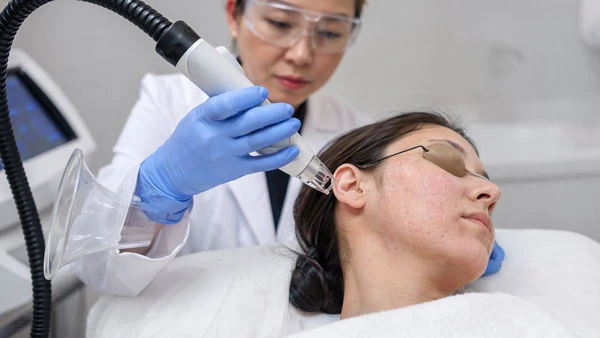
Laser technology uses concentrated light energy to interact with targeted skin structures. Depending on the wavelength and treatment mode, lasers can remove controlled portions of the skin or deliver heat into selected tissue layers.
For acne scar treatment, fractional laser technology is particularly relevant.
A fractional laser creates microscopic treatment zones while leaving surrounding tissue untreated. These untreated areas support the skin's natural recovery process.
During healing, collagen remodeling takes place, gradually improving the appearance of uneven skin texture.
The treatment does not simply erase an existing scar. Instead, it encourages controlled skin renewal and remodeling.
Results usually develop over time rather than immediately after one session.
Which Laser Treatments Are Used for Acne Scars?
Not every laser is designed for the same skin concern. Several technologies are used in professional aesthetic settings.
1. Fractional CO2 Laser
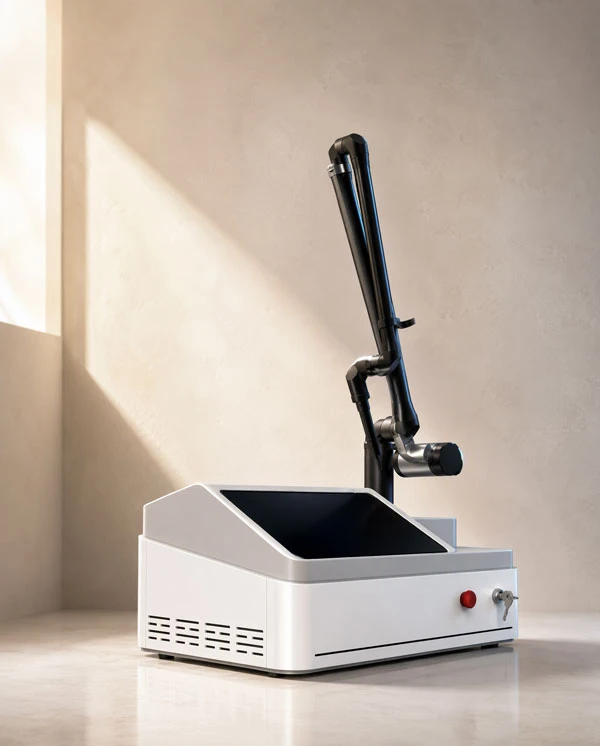
Fractional CO2 laser operates at a wavelength of 10,600 nm and is an established option for treating atrophic acne scars.
It delivers controlled laser energy into selected skin areas, creating microscopic thermal injury zones. The surrounding untreated tissue helps support recovery.
Common applications include:
Boxcar acne scars
Uneven skin texture
Selected rolling scars
Fine lines and enlarged pores
Certain superficial skin irregularities
Fractional CO2 treatment can produce noticeable improvements, particularly in selected atrophic scars. However, deeper scars may require additional procedures.
Temporary redness, swelling, crusting, and post-inflammatory hyperpigmentation are possible. Recovery requirements depend on treatment intensity and individual skin characteristics.
2. Non-Ablative Fractional Laser
Non-ablative fractional lasers deliver energy into the skin without removing the outer skin surface in the same way as ablative CO2 systems.
Common wavelengths include 1550 nm and 1540 nm, depending on the platform.
These systems are used to stimulate dermal remodeling and improve skin texture over a series of treatments.
Potential applications include:
Mild to moderate acne scars
Uneven skin texture
Enlarged pores
Fine lines
Early signs of skin aging
Compared with ablative fractional treatments, non-ablative procedures generally involve less surface disruption and shorter recovery periods. However, several sessions may be needed, and results vary.
3. 1927 nm Thulium Laser
The 1927 nm thulium laser is commonly used for superficial skin resurfacing and pigmentation-related concerns.
It can help improve uneven skin tone, sun damage, and certain superficial textural irregularities.
For acne scar patients, it may be considered when pigmentation and superficial skin texture are also concerns.
However, 1927 nm treatment should not be presented as a complete solution for deep ice pick or boxcar scars. Its role is different from that of deeper resurfacing technologies.
4. Picosecond Laser
Picosecond laser technology delivers extremely short pulses of laser energy. Depending on the wavelength and fractional handpiece, it can be used for pigmentation and selected skin rejuvenation applications.
Fractional picosecond treatments may support improvements in acne scar appearance and skin texture.
The treatment mechanism differs from traditional fractional CO2 resurfacing, and the results depend on the device configuration and treatment indication.
It is important to distinguish between a picosecond laser designed primarily for tattoo removal and a system equipped with appropriate fractional treatment technology.
Can Laser Treatment Remove All Acne Scars?
The outcome depends largely on the original scar structure.
Superficial scars and mild textural irregularities may respond more favorably to laser resurfacing. Deep ice pick scars and tethered rolling scars are more challenging because their structural changes extend beyond the skin surface.
Some patients experience substantial improvement after a series of treatments, while others require a combination of procedures.
For example:
Fractional CO2 laser may be considered for selected depressed scars.
Subcision may help release fibrous attachments beneath rolling scars.
Microneedling or RF microneedling may be considered for selected textural concerns.
Chemical reconstruction techniques may be appropriate for certain narrow, deep scars under specialist supervision.
A treatment plan should be based on scar classification rather than selecting a laser simply because it has a higher power rating.
What Factors Affect Laser Acne Scar Results?
Several factors influence the final outcome.
Scar depth and type: Deep scars usually require more complex treatment planning than superficial irregularities.
Skin type: Patients with darker skin tones may have a greater risk of post-inflammatory hyperpigmentation following certain laser procedures. Wavelength, energy density, and treatment intensity must be carefully selected.
Treatment parameters: Pulse energy, density, spot size, and treatment coverage influence the treatment response and recovery process.
Number of sessions: Acne scar improvement often requires multiple sessions rather than a single treatment.
Aftercare: Sun protection, appropriate skincare, and following professional aftercare instructions are important during recovery.
How Many Laser Sessions Are Needed?
There is no universal treatment schedule for acne scars.
Some patients may notice improvement after their first session, while others require several treatments spaced over an appropriate recovery period.
Fractional CO2 and non-ablative fractional laser treatments are commonly performed as a series when clinically appropriate.
The practitioner should assess the skin after each session before deciding whether another treatment is necessary.
It is also important to allow sufficient time for collagen remodeling before judging the final result.
Choosing the Right Laser Equipment for an Aesthetic Clinic
For aesthetic clinics and professional beauty businesses, acne scar treatment is not simply about purchasing a machine with a popular wavelength.
The equipment should match the treatments the clinic intends to offer.
When evaluating laser equipment, consider:
Available wavelengths and treatment modes
Fractional scanning capabilities
Adjustable energy and treatment density
Spot size and pulse configuration
Cooling and safety systems
Operator training and technical documentation
Maintenance and after-sales support
For clinics offering multiple skin rejuvenation services, a combination of laser technologies may provide more treatment flexibility than relying on one device for every skin concern.
NewAngie provides professional aesthetic laser equipment, including fractional CO2 and dual-wavelength 1550 nm/1927 nm systems.
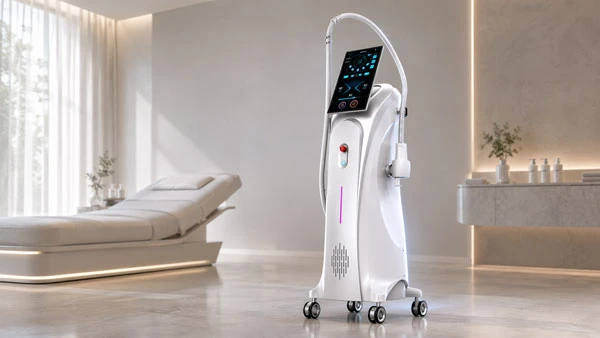
The BMFR29 dual-wavelength platform combines 1550 nm and 1927 nm technology for different skin rejuvenation applications. The 1550 nm wavelength is associated with dermal remodeling, while 1927 nm is commonly used for superficial resurfacing and pigmentation-related treatments.
This combination allows professional businesses to explore different skin treatment programs using one platform, subject to the device's approved indications and operating protocols.
NewAngie also supports OEM and ODM customization for distributors and businesses developing their own aesthetic equipment brands.