


Is 1927nm Replacement For Microneedling RF
Aug 30, 2026
Leave a message
The aesthetic industry is entering a new stage of skin rejuvenation, with 1927nm thulium laser technology receiving increasing attention as clinics look for effective alternatives to traditional resurfacing procedures. At the same time, RF microneedling remains one of the most widely discussed technologies for improving skin texture, acne scars, wrinkles, laxity, and overall skin quality.
This naturally raises an important question: Is 1927nm laser a replacement for RF microneedling?
The short answer is not exactly. A 1927nm laser and RF microneedling use fundamentally different energy delivery mechanisms, target different tissue depths, and can be selected for different treatment objectives. However, for certain indications-particularly pigmentation, superficial photodamage, uneven skin tone, and epidermal-to-superficial dermal rejuvenation-a 1927nm thulium laser can be a compelling alternative to RF microneedling.
For clinics and aesthetic device distributors, understanding the difference is essential. The right technology is not necessarily the one that replaces another device. In many cases, the strongest business strategy is to understand which treatment each technology performs best and how both can fit into a modern skin rejuvenation portfolio.
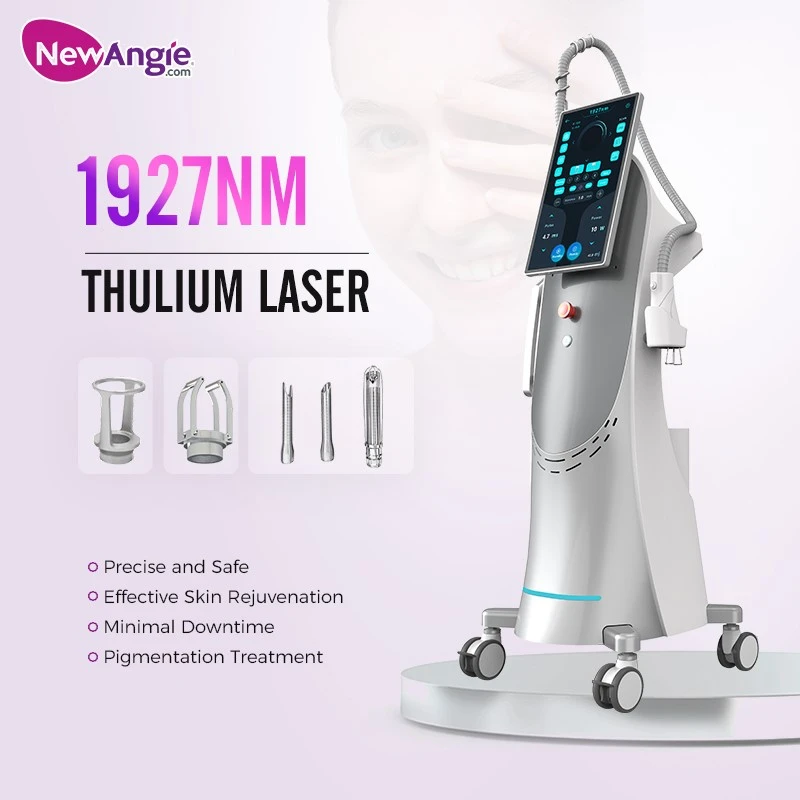
What Is a 1927nm Thulium Laser?
A 1927nm thulium laser is a fractional laser technology that operates at a wavelength strongly absorbed by water. Because biological tissue contains a high percentage of water, this wavelength can deliver controlled thermal energy to the superficial layers of the skin.
The 1927nm wavelength is particularly interesting for treatments involving:
Pigmentation and uneven skin tone
Sun-damaged skin
Superficial photodamage
Fine lines
Rough skin texture
Enlarged pores
Certain types of acne-related discoloration
Overall skin rejuvenation
Fractional delivery means that the laser does not necessarily treat the entire skin surface uniformly. Instead, energy can be delivered in microscopic treatment zones while leaving surrounding tissue untreated. This approach is designed to support a controlled healing response while potentially reducing downtime compared with fully ablative resurfacing.
For manufacturers and clinics, the major attraction of 1927nm technology is its positioning between aggressive resurfacing and gentler non-ablative rejuvenation approaches.
How Does RF Microneedling Work?
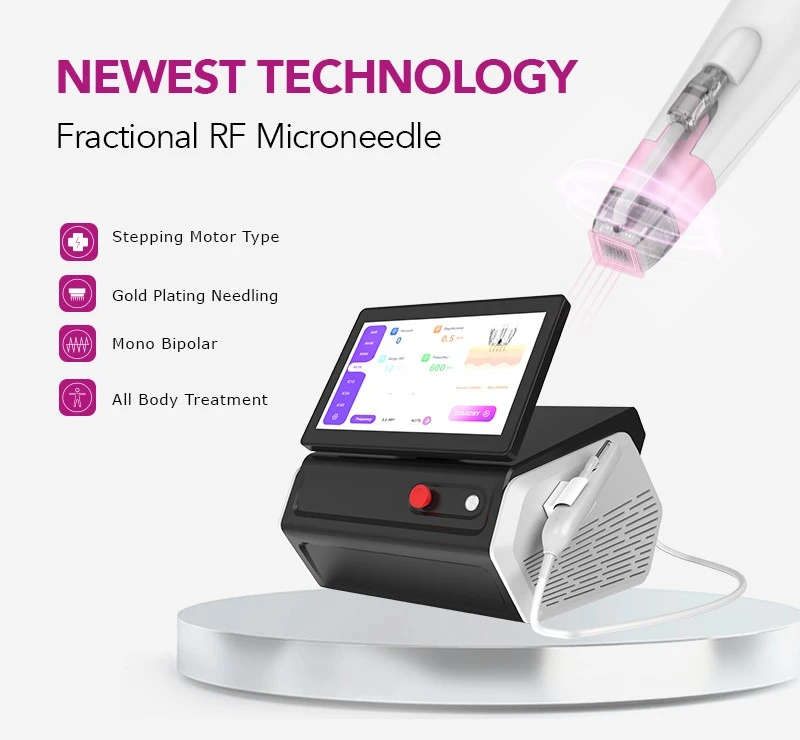
RF microneedling combines two technologies: microneedling and radiofrequency energy.
Very small needles or pins penetrate the skin to a controlled depth. Radiofrequency energy is then delivered into the tissue, creating a thermal effect within targeted areas of the dermis.
The treatment is therefore mechanically and thermally driven.
The needles provide controlled penetration, while RF energy creates localized heating. Depending on the device design, needle configuration, penetration depth, RF power, and treatment parameters, RF microneedling can be used to address concerns such as:
Skin laxity
Fine lines and wrinkles
Acne scars
Uneven texture
Enlarged pores
Collagen remodeling
Certain body skin tightening applications
One of the major advantages of RF microneedling is that energy can be delivered beneath the epidermis rather than relying primarily on superficial laser absorption.
This difference is important when comparing RF microneedling with 1927nm laser technology.
1927nm Laser vs RF Microneedling: Key Difference
The most important distinction is how the energy reaches the tissue.
A 1927nm laser uses optical energy. The wavelength interacts strongly with water-containing tissue, allowing controlled thermal treatment of targeted skin layers.
RF microneedling uses radiofrequency energy delivered through needles or electrodes, generally allowing practitioners to target specific depths within the dermis.
In simple terms:
| Feature | 1927nm Thulium Laser | RF Microneedling |
|---|---|---|
| Energy type | Laser | Radiofrequency |
| Delivery method | Fractional laser beam | Needles/electrodes |
| Primary interaction | Strong water absorption | Electrical resistance and thermal heating |
| Typical focus | Pigmentation, tone, texture, resurfacing | Collagen remodeling, scars, tightening |
| Epidermal treatment | Strong | More limited depending on device |
| Dermal heating | Yes, depending on settings | Core treatment mechanism |
| Needle penetration | No | Yes |
| Skin tightening | Secondary benefit | Major treatment objective |
| Pigmentation | Strong application | Usually not the primary strength |
| Acne scars | Can improve texture and discoloration | Often useful for deeper textural scars |
| Downtime | Device- and setting-dependent | Device- and setting-dependent |
This comparison shows why it is inaccurate to describe 1927nm as a universal replacement for RF microneedling.

Can 1927nm Laser Replace RF Microneedling for Acne Scars?
This depends heavily on the type of acne scar.
Acne scars are not one single condition. Rolling scars, boxcar scars, ice-pick scars, post-inflammatory hyperpigmentation, and post-inflammatory erythema can require different treatment strategies.
A 1927nm laser can be attractive when the patient's main concern is:
Uneven skin texture
Surface irregularity
Pigmentation following acne
Photodamage
Mild-to-moderate textural imperfections
RF microneedling may be more attractive when the treatment objective involves deeper dermal remodeling and collagen stimulation, particularly when skin laxity is also present.
Therefore, clinics should avoid presenting one technology as universally superior.
A better approach is to evaluate scar depth, skin type, pigmentation, laxity, treatment tolerance, and desired downtime before selecting the technology.
Can 1927nm Laser Replace RF Microneedling for Skin Tightening?
This is another area where the distinction becomes particularly important.
Although fractional laser treatments can stimulate remodeling and improve the appearance of fine lines and texture, 1927nm is not primarily a dedicated skin-tightening technology.
RF microneedling is designed specifically to deliver controlled thermal energy into the dermis, making it a popular option for patients whose primary concern is skin laxity.
For facial tightening, jawline definition, fine wrinkles, and certain areas of lax skin, RF microneedling can therefore remain highly relevant.
A clinic that replaces RF microneedling entirely with 1927nm may lose an important treatment category.
Conversely, a clinic that uses only RF microneedling may miss opportunities in pigmentation-focused skin rejuvenation where a 1927nm system can be particularly attractive.
Where 1927nm Laser Has a Strong Advantage
The strongest positioning for 1927nm technology is generally surface-focused rejuvenation and pigmentation-related concerns.
Because the 1927nm wavelength has strong absorption by water, it can be used to create controlled fractional treatment zones in superficial skin layers.
This makes it particularly interesting for patients who want improvement in:
Uneven pigmentation: Fractional 1927nm treatments are widely associated with pigment and photodamage applications.
Sun damage: Superficial photodamage can make skin appear dull, uneven, and aged.
Skin texture: Controlled resurfacing can help create a smoother-looking skin surface.
Fine lines: Remodeling following controlled thermal injury can contribute to improved skin appearance.
Enlarged pores: Improving overall skin texture may make pores appear less prominent.
For these applications, a 1927nm system can be positioned as a powerful addition to a professional skin rejuvenation platform.
Where RF Microneedling Remains Stronger
RF microneedling continues to have an important role because its fundamental design is different.
When the treatment objective is primarily dermal collagen remodeling, skin tightening, or deeper textural improvement, RF microneedling may offer advantages that a superficial fractional laser does not directly replicate.
The ability to control needle depth is especially important.
Practitioners can select treatment depths according to the anatomical area and treatment objective. The cheeks, forehead, jawline, neck, and other areas may require different approaches.
This makes RF microneedling a highly versatile technology for clinics offering customized skin rejuvenation.
1927nm vs RF Microneedling: Which Has Less Downtime?
There is no single answer because downtime depends on treatment parameters rather than wavelength or device category alone.
A low-energy fractional 1927nm treatment may result in relatively mild temporary redness, swelling, dryness, or peeling. More aggressive settings can produce greater erythema, peeling, and recovery requirements.
RF microneedling can also produce redness, swelling, sensitivity, pinpoint bleeding, crusting, or temporary discoloration depending on the device and settings.
Therefore, clinics should avoid making absolute claims such as "1927nm has zero downtime" or "RF microneedling always requires several days of recovery."
Treatment intensity matters.
Patient skin characteristics, treatment area, practitioner technique, and post-treatment care also influence recovery.
Can Clinics Use 1927nm and RF Microneedling Together?
In many cases, the more interesting question is not "1927nm or RF microneedling?" but "How can the two technologies complement each other?"
Because the technologies operate differently, a clinic can potentially build a broader treatment portfolio by offering both.
For example, a treatment strategy may prioritize RF microneedling when the primary concern is:
Dermal remodeling + skin laxity + deeper acne scarring
while 1927nm may be considered when the primary concern is:
Pigmentation + photodamage + superficial texture + uneven tone
This complementary positioning gives clinics more flexibility when designing individualized treatment plans.
However, combining energy-based procedures should be performed only according to appropriate clinical protocols, device instructions, practitioner training, and patient assessment. Treatments should not simply be stacked because two technologies have different mechanisms.
Why 1927nm Is Attracting Attention From Aesthetic Clinics
The growing interest in 1927nm technology reflects a broader movement in aesthetic medicine toward targeted fractional resurfacing with customizable treatment intensity.
Patients increasingly want visible skin improvement without necessarily choosing highly aggressive resurfacing.
For clinics, this creates demand for platforms that can offer:
Customizable energy settings
Fractional treatment modes
Controlled treatment density
Adjustable spot sizes
Efficient treatment delivery
User-friendly interfaces
Reliable cooling and safety systems
Consistent energy output
For distributors, the opportunity is equally important. A well-designed 1927nm platform can complement existing diode laser, RF, HIFU, CO2, IPL, and other aesthetic technologies instead of competing directly with every device category.

What Should Clinics Consider When Choosing a 1927nm Machine?
Buying a 1927nm laser should involve more than simply comparing the wavelength.
Laser power and stability are important because consistent energy delivery contributes to predictable operation.
Fractional scanning capability should also be evaluated. Different scanning patterns and treatment densities can provide practitioners with greater flexibility.
Spot size and treatment area affect treatment efficiency, particularly for clinics with high patient volume.
Cooling technology is another important consideration. Effective cooling can improve treatment comfort and help manage thermal effects at the skin surface.
The user interface also matters. A professional system should make it straightforward for trained practitioners to select appropriate parameters.
Finally, clinics should evaluate manufacturer support, training, warranty, spare parts, certification, and after-sales service. A sophisticated laser is only valuable to a clinic when it can be operated reliably over the long term.
What Should Distributors Look for in a 1927nm Laser Manufacturer?
For distributors, technical specifications are only one part of the purchasing decision.
A competitive manufacturer should ideally provide a combination of stable manufacturing, product customization, documentation, training, after-sales support, and OEM/ODM capability.
Distributors should also consider whether the manufacturer can support different market requirements.
For example, clinics in Europe, North America, Asia, and other markets may have different expectations regarding documentation, certification, user interface design, electrical specifications, packaging, training, and marketing materials.
A supplier that can provide consistent production and responsive technical support can be more valuable than a supplier competing only on the lowest initial price.
Is 1927nm the Future Replacement for RF Microneedling?
It is more accurate to describe 1927nm as an alternative and complementary skin rejuvenation technology, rather than a direct replacement for RF microneedling.
The two technologies address overlapping aesthetic concerns, but their core mechanisms are different.
1927nm thulium laser has a particularly strong position in fractional resurfacing, pigmentation, photodamage, skin tone, and superficial texture improvement.
RF microneedling remains highly relevant for dermal remodeling, collagen stimulation, skin tightening, and certain types of acne scars.
The future of aesthetic technology is unlikely to be defined by one machine completely replacing another. Instead, successful clinics are increasingly building treatment portfolios around different energy modalities for different patient needs.
1927nm vs RF Microneedling
So, is 1927nm a replacement for RF microneedling?
No-not as a universal replacement.
Instead, 1927nm should be viewed as a highly valuable alternative for selected indications, especially when the treatment goal focuses on pigmentation, photodamage, uneven skin tone, superficial texture, fine lines, and fractional skin rejuvenation.
RF microneedling remains an important option when the primary objective is deeper dermal remodeling, collagen stimulation, acne-scar improvement, and skin tightening.
For an aesthetic clinic, the strongest strategy may therefore be to understand the unique strengths of both technologies rather than choosing one simply because it is newer.
For manufacturers and distributors, this distinction creates an important commercial opportunity. A professional 1927nm thulium laser machine can be positioned not as a replacement for every existing aesthetic platform, but as a specialized solution that expands a clinic's ability to address modern skin rejuvenation demands.